Is Tarmac a Good Choice for a Low-Maintenance Driveway?
For many homeowners, a driveway needs to be practical above everything else. It should provide reliable everyday access, cope with regular vehicle movements and remain straightforward to look after without demanding constant attention. This makes maintenance an important consideration when deciding which driveway surface to install.
For properties in Dover, Kent, tarmac can be an excellent option for homeowners looking for a durable and relatively low-maintenance driveway. Its continuous surface, straightforward appearance and ability to withstand regular use make it particularly well suited to practical residential driveways.
At Dover Driveways & Surfacing, we professionally install tarmac driveways with careful attention to preparation, drainage, edging and the supporting construction beneath the finished surface.
Why Is Tarmac Considered Low Maintenance?
One of the main advantages of tarmac is its relatively simple surface construction.
Unlike surfaces consisting of numerous individual paving units, tarmac creates a largely continuous finish. This means there are fewer joints across the main driveway surface where unwanted growth or loose material can become noticeable.
Routine care is generally straightforward and may involve:
- Removing leaves and debris
- Keeping drainage areas clear
- Cleaning occasional marks
- Monitoring edges for deterioration
- Checking for cracks or surface damage
- Addressing localised defects before they worsen
A well-constructed driveway should not require constant intervention simply to remain practical and presentable.
A Continuous Surface Makes Everyday Care Easier
Tarmac provides a smooth and consistent driveway surface.
For homeowners who prefer a straightforward outdoor area without numerous joints or complicated detailing, this can be particularly appealing.
Leaves, soil and other garden debris can generally be swept away easily, while the dark, uniform appearance means the driveway does not depend on an intricate pattern to maintain its character.
This simplicity is one of the reasons tarmac continues to work well for busy households.
Fewer Joints Can Mean Fewer Areas for Weeds to Establish
Any outdoor hard surface can experience some unwanted plant growth around edges or areas where debris accumulates.
However, because tarmac does not contain the numerous joints associated with some forms of paving, there are fewer openings across the main surface where weeds can potentially establish.
Keeping the driveway clean and preventing organic material from building up can further reduce opportunities for unwanted growth.
Edges and junctions should still receive occasional attention, particularly where the driveway meets lawns or planted areas.
Good Installation Is Essential for Low Maintenance
Choosing tarmac does not automatically guarantee a trouble-free driveway.
Much of its long-term performance depends on how the surface is constructed.
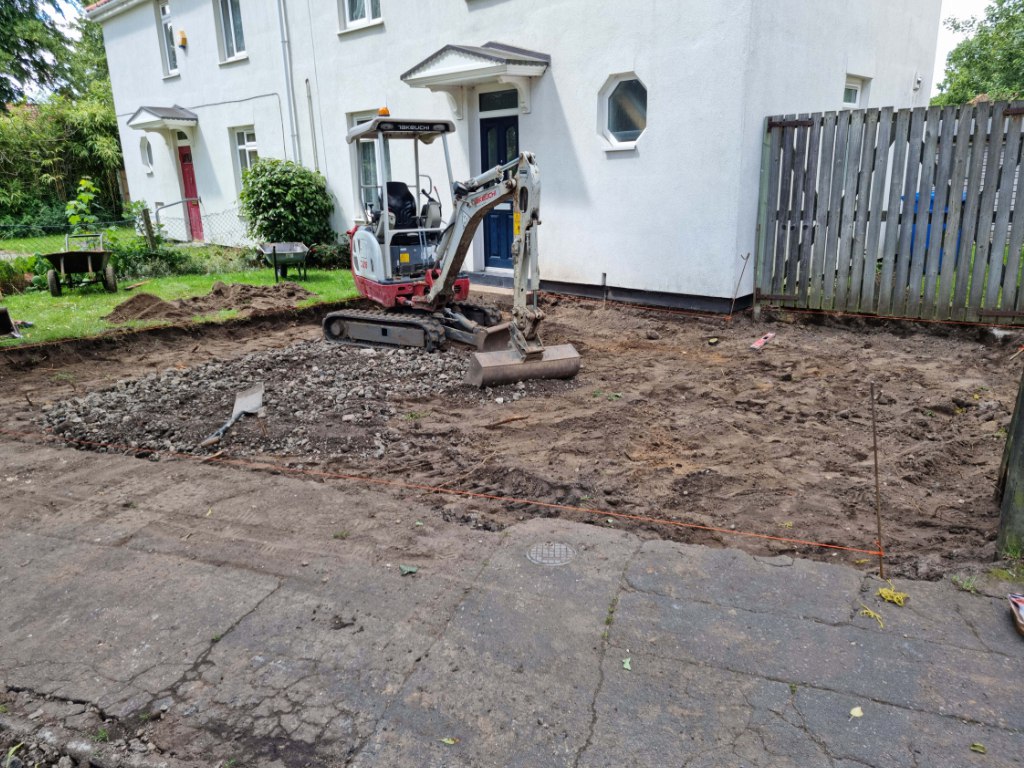
A professionally installed tarmac driveway should begin with appropriate ground preparation and a suitable supporting base. If the materials underneath are poorly prepared or inadequately compacted, movement can eventually become visible in the finished surface.
A low-maintenance driveway therefore starts below ground level.
The Sub-Base Supports the Entire Driveway
The sub-base distributes loads from vehicles and provides a stable platform for the layers above.
If this foundation remains stable, the tarmac surface is better positioned to cope with everyday use. Where the underlying construction moves, however, depressions, cracking or deformation may eventually appear.
At Dover Driveways & Surfacing, we consider the complete driveway construction rather than focusing solely on the final visible layer.
Correct preparation is one of the most important factors in creating a surface that remains straightforward to maintain.
Proper Compaction Makes a Difference
Driveway construction involves placing and compacting materials so that they form a stable supporting structure.
Inadequate compaction can allow settlement to occur after the driveway enters regular use.
This may result in low areas or irregularities that collect water and eventually require attention.
Professional preparation helps minimise avoidable movement by creating a properly consolidated foundation before the finished tarmac is installed.
Drainage Is Important for Any Low-Maintenance Driveway
A driveway that regularly holds standing water is unlikely to remain as straightforward to manage as one designed with appropriate water movement in mind.
Finished levels and falls should therefore be considered during installation.
The aim is to avoid unnecessary low points where rainfall repeatedly collects while ensuring water is managed appropriately around the driveway.
Drainage should be part of the initial design rather than something considered only after the new surface has been completed.
Tarmac Works Well for Regular Vehicle Use
A residential driveway needs to cope with repeated vehicle movements, not simply look attractive.
When installed over suitable foundations, tarmac provides a strong surface for everyday parking and access.
Its continuous construction makes it particularly practical for areas where vehicles regularly enter, leave and manoeuvre.
This combination of durability and simplicity contributes to its appeal for homeowners who want a driveway that performs its main purpose without requiring elaborate maintenance.
What Maintenance Does a Tarmac Driveway Need?
Low maintenance does not mean no maintenance.
Occasional basic care can help keep a tarmac driveway in good condition and make it easier to identify developing problems.
Useful habits include clearing accumulated leaves, keeping drainage features unobstructed and checking the surface periodically for changes.
It is particularly worth looking for:
- New cracks
- Sunken areas
- Loose edges
- Surface deformation
- Persistent puddles
- Damage around frequently used sections
Identifying these signs early allows the cause to be investigated before deterioration becomes more extensive.
Small Cracks Should Not Be Ignored
A minor crack does not necessarily indicate a serious problem, but it should be monitored.
Cracking can occur for different reasons, and the appropriate response depends on what has caused it.
If movement beneath the driveway is responsible, simply treating the visible crack without addressing the supporting layers may not provide a lasting solution.
Professional assessment can establish whether a defect is confined to the surface or connected with a deeper issue.
Edges Need Proper Support
The edges of a tarmac driveway are particularly important because they define and support the finished surface.
Poorly constructed or unsupported edges can become vulnerable to deterioration, particularly where vehicles regularly travel close to them.
Suitable edging can help maintain the shape of the driveway while also creating a neat transition with surrounding features.
Depending on the layout, tarmac may meet:
- Lawns
- Paths
- Planting areas
- Property entrances
- Other hard landscaping
Careful detailing around these areas contributes to the long-term quality of the installation.
Tarmac Can Suit Simple and More Complex Driveway Shapes
Low-maintenance design is not limited to perfectly rectangular driveways.
Tarmac can be installed across a range of layouts, making it suitable for driveways with curves, wider parking areas and changes in direction.
Its continuous finish allows the surface to follow the required shape without creating an unnecessarily complicated appearance.
For homeowners who value a clean and functional outdoor space, this adaptability can be particularly useful.
Can Tarmac Be Repaired If Localised Damage Develops?
In many situations, localised tarmac damage can be repaired without replacing the entire driveway.
Whether this is appropriate depends on the extent of the defect and, importantly, its underlying cause.
A small damaged section surrounded by otherwise stable surfacing may require only targeted attention. If widespread cracking, settlement or deformation is occurring, the driveway should be assessed more broadly.
Effective maintenance involves knowing when a small repair is sufficient and when deterioration indicates a larger problem.
How Does the Age of the Driveway Affect Maintenance?
All driveway surfaces naturally change as they are exposed to weather and regular use.
An older tarmac driveway may gradually show signs of wear without necessarily becoming unsuitable.
The important consideration is whether deterioration remains superficial or begins affecting the practical performance of the driveway.
A surface that remains stable, drains effectively and handles normal vehicle movements may continue serving its purpose even as its appearance naturally matures.
A Simple Appearance Can Be an Advantage
Not every homeowner wants a driveway with elaborate patterns or decorative features.
Tarmac provides a clean, understated appearance that can work well with many property styles. Edging can be incorporated where additional definition is wanted without making the overall design unnecessarily complicated.
This simplicity can also contribute to easier upkeep because the driveway does not depend on maintaining numerous decorative elements to retain a tidy appearance.
Why Professional Installation Reduces Future Problems
Many driveway problems blamed on the surface material actually begin beneath it.
Settlement, unsuitable levels and unstable areas can all affect how a finished driveway performs.
Professional installation considers:
- Existing ground conditions
- Excavation and preparation
- Sub-base construction
- Compaction
- Surface levels
- Drainage
- Edge restraints
- Intended vehicle use
- Connections with surrounding areas
Getting these details right from the outset can significantly reduce avoidable maintenance later.
At Dover Driveways & Surfacing, we provide tarmac driveway installations throughout Dover, Kent, with careful attention to these fundamental elements.
Is Tarmac Right for Every Driveway?
Tarmac is a strong option for many homeowners seeking a practical, straightforward driveway, but every property is different.
The available space, ground conditions, drainage requirements, intended use and preferred appearance should all influence the choice of surface.
A professional assessment can establish whether tarmac is suitable for the individual site and how the driveway should be constructed to provide dependable everyday performance.
Conclusion
Tarmac can be an excellent choice for a low-maintenance driveway. Its continuous surface is straightforward to keep tidy, contains fewer joints across the main driveway area and provides a durable finish for regular vehicle access when properly installed.
However, low maintenance depends heavily on construction quality. Correct ground preparation, a stable sub-base, thorough compaction, suitable drainage and well-supported edges all contribute to how successfully a tarmac driveway performs over time.
If you are considering a new low-maintenance driveway in Dover, Kent, Dover Driveways & Surfacing can assess your property and determine whether tarmac is suitable for your requirements. Contact our team to discuss a professionally installed driveway designed around practical everyday use and dependable long-term performance.
Call us on: 01304 796 895
Click here to find out more about Dover Driveways & Surfacing
Click here to complete our contact form and see how we can help with your driveways.